Champagne
The Champagne region, located in northeastern France, is the birthplace and undisputed capital of sparkling wine. Only wines made within this strictly defined area and according to specific production rules may legally bear the name “Champagne.” The region lies about 150 kilometers east of Paris and benefits from a cool continental climate with chalky subsoils, particularly well-suited to the high acidity and finesse that define Champagne wines. These natural conditions, combined with centuries of tradition, have cemented Champagne’s status as a global symbol of luxury, celebration, and refinement.
Champagne production is governed by rigorous standards that include strict vineyard practices, limited yields, and, most famously, the méthode champenoise (traditional method), which requires a secondary fermentation in bottle to create the wine's signature effervescence. The three primary grape varieties used are Chardonnay, Pinot Noir, and Meunier (formerly Pinot Meunier), each contributing unique characteristics: Chardonnay for elegance and acidity, Pinot Noir for structure and red fruit, and Meunier for approachability and softness.
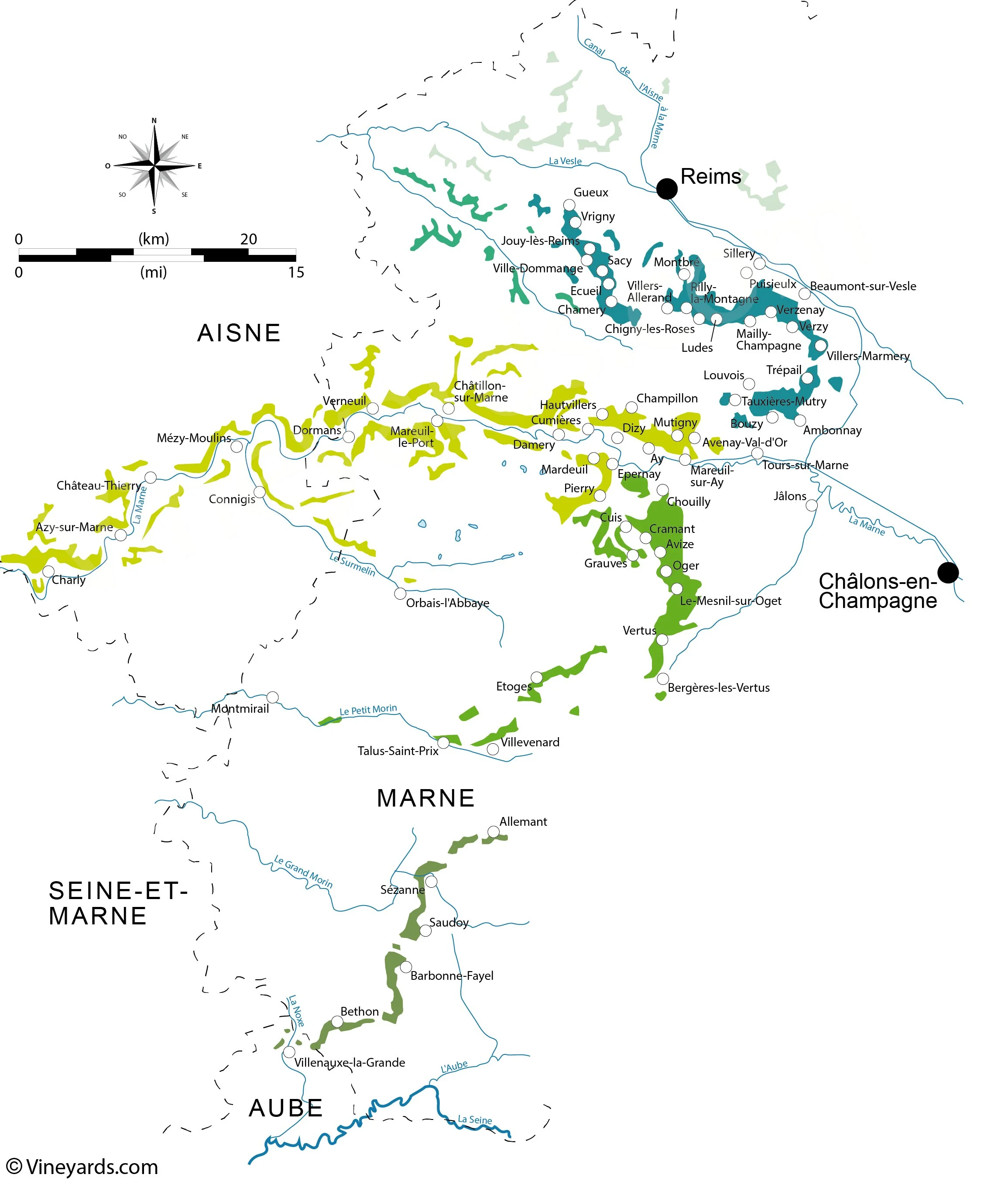
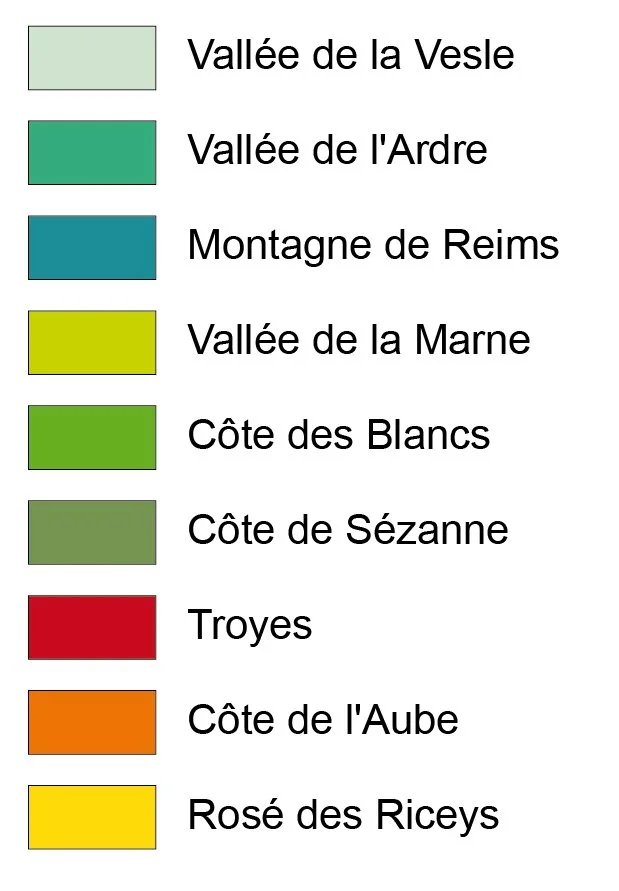
The region is divided into five major subregions: Montagne de Reims, Vallée de la Marne, Côte des Blancs, Côte de Sézanne, and Aube (or Côte des Bar). Each contributes its own identity based on soil composition, microclimate, and grape variety predominance. Champagne houses (maisons), grower-producers (récoltants-manipulants), and cooperatives all play a role in the complex tapestry of Champagne production, ranging from grand marques like Moët & Chandon and Veuve Clicquot to small artisanal growers crafting terroir-driven cuvées.
Champagne is perhaps the most nuanced of all wine regions in terms of blending—not just of grapes, but of vineyard parcels, vintages, and reserve wines. While vintage Champagne is only made in exceptional years, most bottles on the market are non-vintage (NV) blends designed to maintain a consistent house style. Prestige cuvées, such as Dom Pérignon, Cristal, and Salon, represent the pinnacle of craftsmanship and are produced only in select vintages.
Montagne de Reims
The Montagne de Reims is one of Champagne’s most prestigious subregions, located between the cities of Reims and Épernay. This area is known for its cooler climate, forested hills, and especially its chalk and clay soils that favor Pinot Noir, which dominates plantings here. Pinot Noir from Montagne de Reims provides power, body, and aromatic depth to Champagne blends. The region is home to many Grand Cru villages, including Bouzy, Ambonnay, and Verzy, which are prized for their structured, complex wines. Champagnes from this area often exhibit red fruit character, minerality, and an assertive backbone, making them ideal in vintage blends and for aging. Many top houses source heavily from this region for their premium cuvées.
Côte des Blancs
To the south of Épernay lies the Côte des Blancs, the spiritual heartland of Chardonnay in Champagne. Named for the “white slopes” of chalky soil and white grape vines, this subregion is famous for producing blanc de blancs Champagnes that are prized for their finesse, bright acidity, and aging potential. The pure chalk soils of the Côte des Blancs contribute to the precise, mineral-driven profile of its wines. Key Grand Cru villages include Le Mesnil-sur-Oger, Avize, Cramant, and Oger—names often found on labels of high-end, single-village cuvées. These wines are typically linear, elegant, and floral in youth, developing rich, toasty, and nutty complexity over time. Chardonnay from this region forms the backbone of many prestige cuvées, including Salon and Taittinger’s Comtes de Champagne.