Piemonte
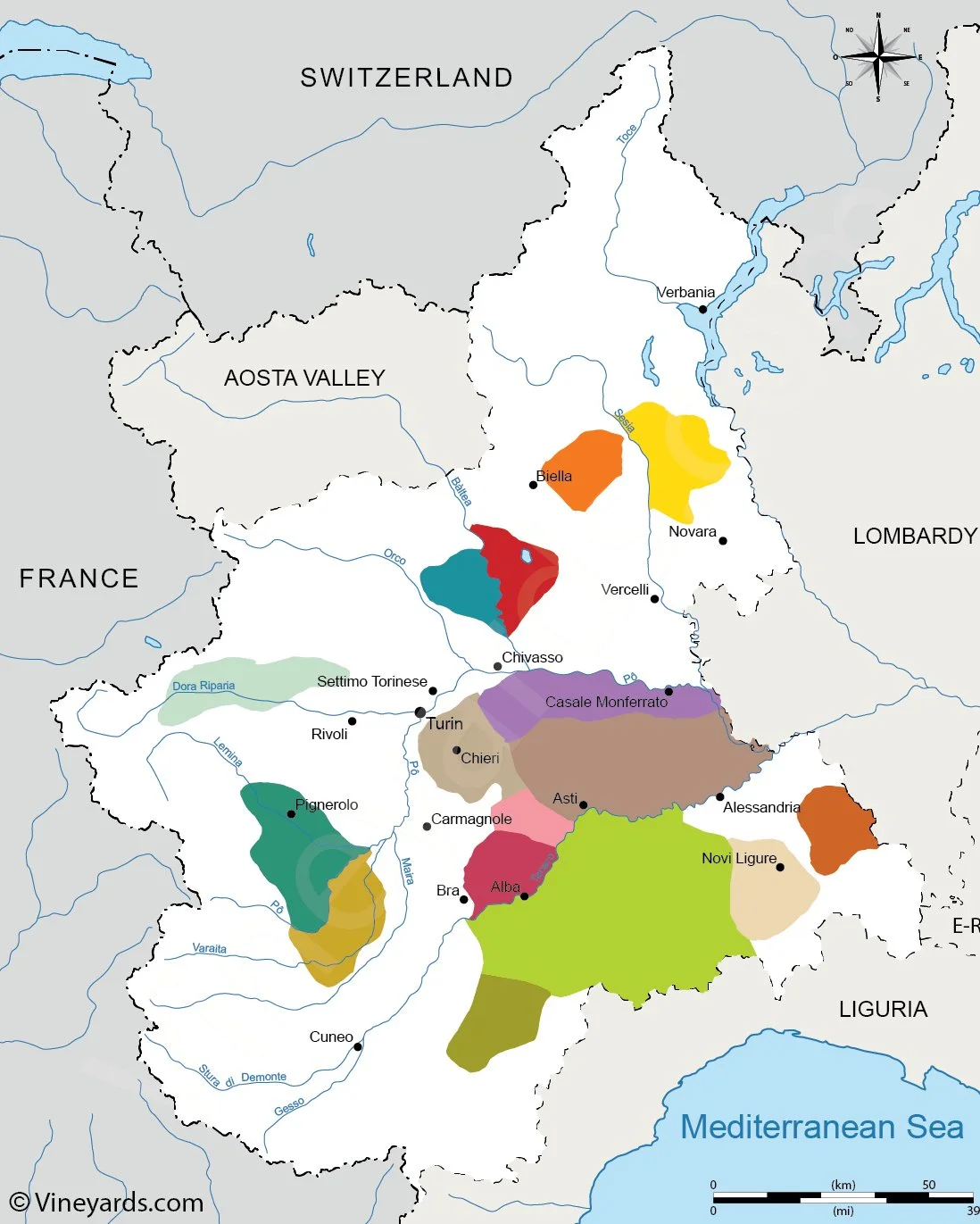
Piedmont (or Piemonte in Italian), located in the northwestern corner of Italy at the foothills of the Alps, is one of the country’s most prestigious and complex wine regions. Renowned for its powerful reds, delicate whites, and deep-rooted viticultural traditions, Piedmont combines alpine freshness with rolling hills and fog-shrouded valleys to produce wines of remarkable elegance and longevity. The region borders France and Switzerland and enjoys a continental climate with cold winters and warm, dry summers, moderated by mountain breezes and the Po River basin.
Piedmont is best known for its red wines, particularly those made from the Nebbiolo grape, which reaches its peak in the DOCG zones of Barolo and Barbaresco. Other key red grapes include Barbera, which offers juicy acidity and approachability, and Dolcetto, a softer, fruit-forward variety. The region also shines in white wines, especially Arneis, Cortese (used in Gavi), and the aromatic Moscato Bianco, which produces the lightly sparkling Moscato d’Asti.
The region’s wines are deeply tied to terroir, and unlike Tuscany or Veneto, Piedmont relies less on international varieties and more on indigenous grapes. It also features a unique mosaic of small family-owned vineyards, emphasizing artisan-scale production over industrial output. The combination of traditional winemaking methods and a rising movement of modernists creates a dynamic tension that has propelled the region’s global reputation.
Piedmont boasts more DOCGs than any other Italian region, a testament to its complexity and emphasis on quality. While Barolo is often called the “King of Wines,” the broader regional identity is far more nuanced, with diverse expressions emerging from distinct microclimates and soil types across the region.
Southern Piemonte (Langhe, Roero, Monferrato)
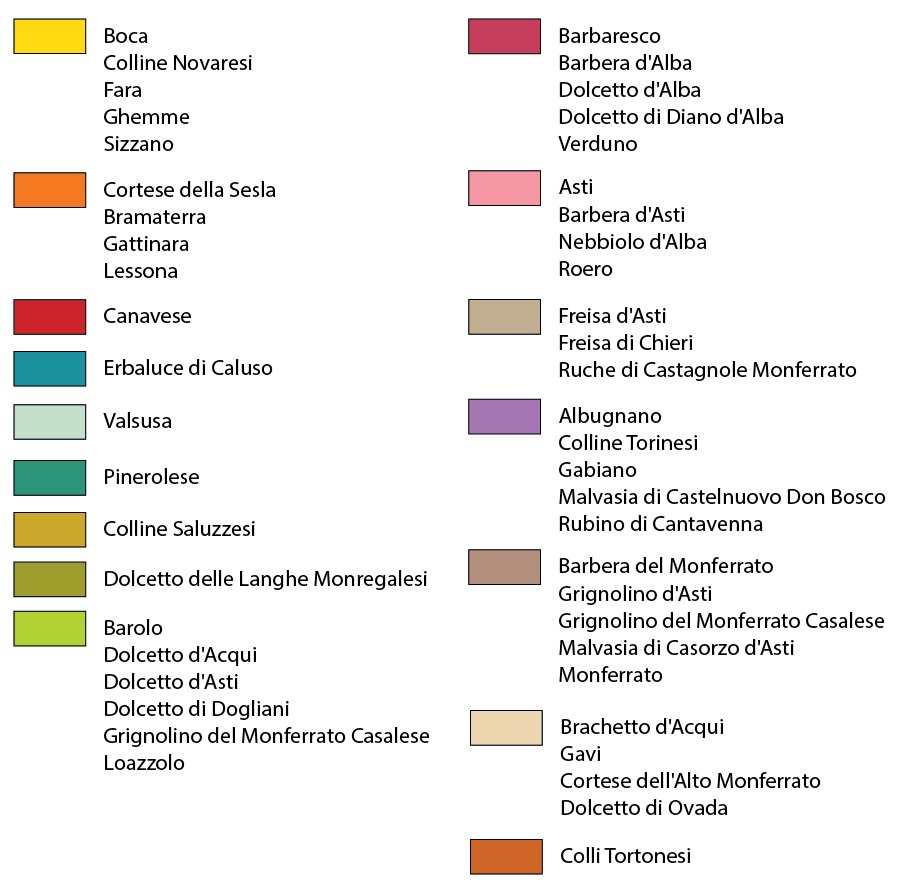
The southern part of Piedmont is where most of the region’s internationally celebrated wines originate. This area includes the Langhe, Roero, and Monferrato hills, all recognized as UNESCO World Heritage Sites for their cultural and agricultural importance. The Langhe is home to the two crown jewels of Nebbiolo: Barolo and Barbaresco, both DOCGs known for their power, complexity, and aging potential. Barolo tends to be more robust and austere in youth, while Barbaresco is often more accessible earlier, though no less elegant. The soils here are primarily calcareous marl and sandstone, ideal for Nebbiolo’s demanding nature.
This zone also produces Barbera d’Alba and Barbera d’Asti, offering softer, fruit-driven alternatives to Nebbiolo, as well as Dolcetto, which provides juicy, food-friendly reds. Whites like Roero Arneis and Gavi (Cortese) show bright acidity and floral, mineral character. Producers in this area range from traditionalists using long maceration and large casks, to modernists experimenting with shorter fermentation times and French oak, contributing to a vibrant, evolving wine scene.
Northern Piemonte (Alto Piemonte and Beyond)
Northern Piedmont, often overshadowed by the fame of Barolo and Barbaresco, offers some of the region’s most exciting and historic wines. This area, known as Alto Piemonte, includes appellations like Ghemme, Gattinara, Boca, and Lessona, where Nebbiolo (locally called Spanna) thrives in volcanic and glacial soils. The wines here are typically lighter in body than those from the south, with vivid acidity, firm tannins, and aromatic complexity—often described as more ethereal or alpine in character.
The cooler climate and higher elevation create wines that are elegant, structured, and increasingly sought after by enthusiasts looking for a more restrained expression of Nebbiolo. Unlike the mono-varietal nature of Barolo and Barbaresco, these northern wines are often blended with local grapes like Vespolina and Uva Rara, adding spice and softness. This area is undergoing a quiet renaissance, with young winemakers reviving old vineyards and shining a spotlight on forgotten terroirs.