Toscana
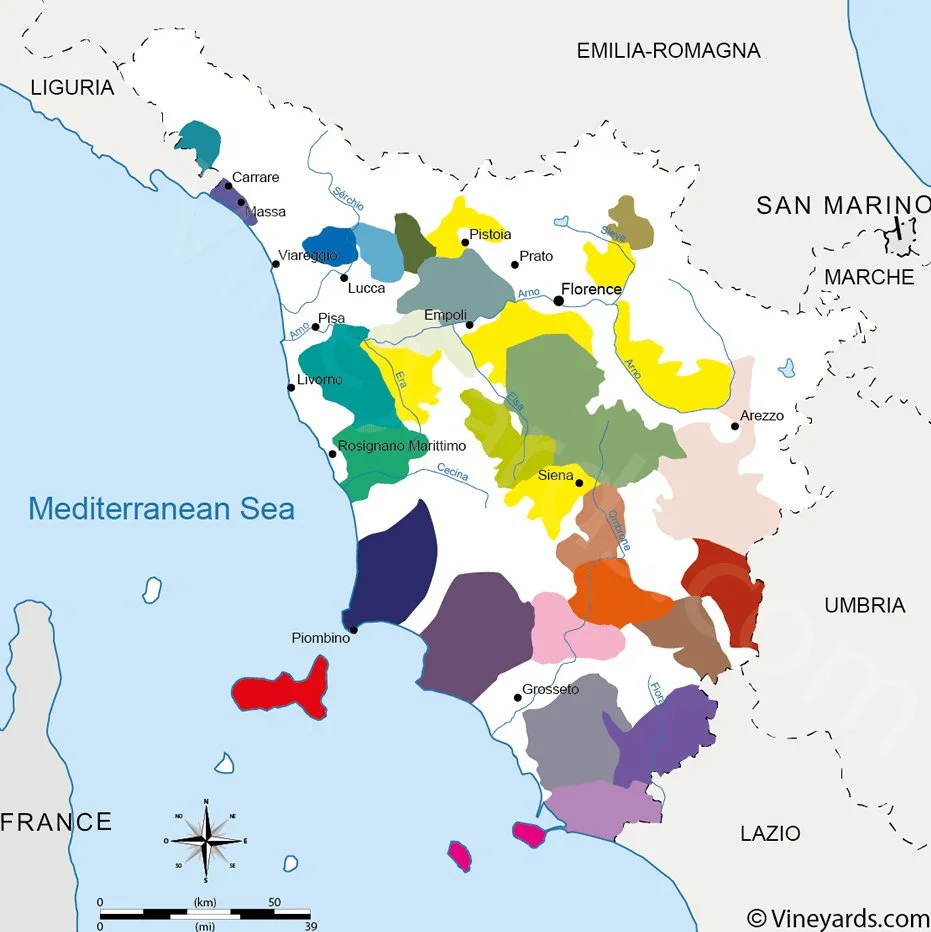
Tuscany (Toscana in Italian), located in central Italy, is one of the world’s most iconic wine regions. Famed for its scenic landscapes of rolling hills, cypress trees, and Renaissance architecture, Tuscany also boasts a winemaking tradition that stretches back to the Etruscans. The region is defined by a Mediterranean climate with hot, dry summers and cooler inland breezes, moderated by its elevation and proximity to the Tyrrhenian Sea. This combination of sun, altitude, and varied soils gives Tuscan wines their unique balance of ripeness, acidity, and structure.
The heart of Tuscan wine is Sangiovese, a noble and versatile red grape that forms the backbone of the region’s most important appellations, including Chianti, Brunello di Montalcino, and Vino Nobile di Montepulciano. Known for its bright acidity, firm tannins, and flavors of sour cherry, herbs, and earth, Sangiovese is capable of producing wines that range from fresh and vibrant to powerful and age-worthy.
Tuscany also helped ignite the modern Italian wine movement with the emergence of the Super Tuscans—non-traditional blends often featuring international varieties like Cabernet Sauvignon, Merlot, and Syrah, usually classified under the less-restrictive IGT Toscana designation. These wines, many from the coastal Maremma, helped elevate Tuscany's global profile and pushed the boundaries of DOC and DOCG regulations.
While Tuscany is best known for its reds, it also produces whites such as Vernaccia di San Gimignano, Vermentino, and Trebbiano, as well as Vin Santo, a traditional dessert wine made from dried grapes. The region is also a leader in agritourism, with thousands of wineries offering tastings, lodging, and immersive experiences.
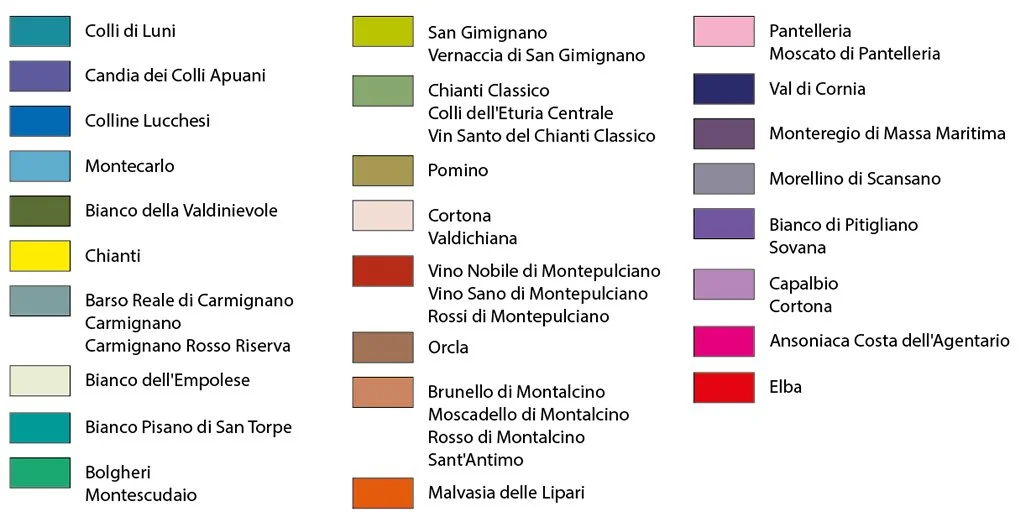
Central Tuscany (Chianti, Montalcino, Montepulciano)
Central Tuscany is the historic and cultural heartland of Tuscan wine. This area encompasses the rolling hills around Florence, Siena, and Arezzo, home to the world-famous Chianti Classico DOCG. Wines from this region must be made primarily from Sangiovese, though blending with native or international varieties is permitted. Chianti Classico wines tend to be medium-bodied, with vibrant acidity, red cherry fruit, and herbal notes. The best come from hillside vineyards with galestro (friable marl) and alberese (limestone) soils.
To the south lies Brunello di Montalcino, one of Italy’s most prestigious DOCGs, made from 100% Sangiovese Grosso (locally called Brunello). Brunello is known for its power, longevity, and complexity, often requiring years of bottle aging before reaching its peak. Nearby, Vino Nobile di Montepulciano offers a softer, more approachable style using a local clone of Sangiovese called Prugnolo Gentile, often blended with Canaiolo and other varieties.
Coastal Tuscany (Bolgheri, Maremma, Montecucco)
Coastal Tuscany, particularly the Maremma region and the Bolgheri DOC, represents the modern, international face of Tuscan wine. The warmer, maritime-influenced climate and diverse soils—ranging from sand and clay to volcanic and gravel-rich alluvium—make this area ideal for Bordeaux varieties such as Cabernet Sauvignon, Merlot, and Cabernet Franc. These grapes, once considered experimental, now form the backbone of the Super Tuscan movement, which began in the 1970s with revolutionary wines like Sassicaia, Ornellaia, and Tignanello.