Stellenbosch
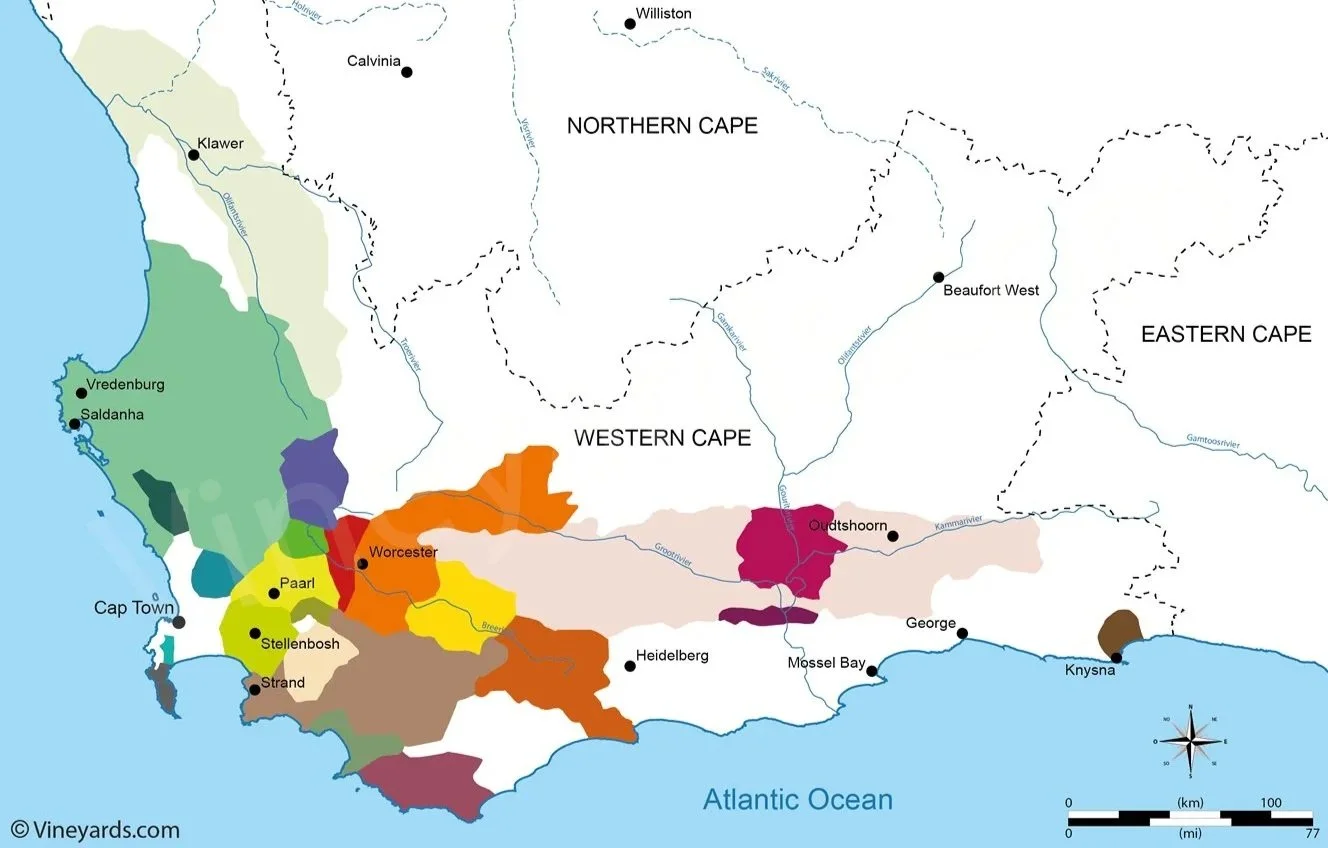
Stellenbosch, located just east of Cape Town in the Western Cape, is South Africa’s most prestigious and internationally acclaimed wine region. With a winemaking history dating back over three centuries, Stellenbosch has become the heart of the South African wine industry—home to some of its oldest estates, top universities, and most innovative winemakers. The region benefits from a Mediterranean climate, diverse soils, and complex topography shaped by the Helderberg, Simonsberg, and Stellenbosch Mountain ranges.
Stellenbosch is best known for its red wines, particularly Cabernet Sauvignon, Merlot, Syrah, and Bordeaux-style blends, but it also produces high-quality Chenin Blanc, Chardonnay, and Sauvignon Blanc. Stylistically, the region straddles the line between Old World structure and New World ripeness, offering wines that are polished, expressive, and increasingly terroir-driven.
Mountain & Hillside Vineyards
The elevated slopes and foothills of Simonsberg, Helderberg, and Jonkershoek are home to many of Stellenbosch’s most celebrated vineyards. These sites benefit from cooler temperatures, poor rocky soils, and excellent drainage, resulting in lower yields and more concentrated fruit. The wines here—particularly Cabernet Sauvignon, Cabernet Franc, and Syrah—tend to be structured, mineral, and age-worthy, with firm tannins, dark fruit, and savory complexity.
These hillside vineyards are often compared to Bordeaux’s Left Bank or the Northern Rhône, especially when planted to Cabernet or Syrah. Notable producers in these zones include Rust en Vrede, Waterford Estate, Kanonkop, Le Riche, and Thelema, among others. Winemaking here often emphasizes precision, restrained power, and longevity, making these wines sought after both domestically and abroad.
Valley & Lower Slopes
In contrast, the lower-lying parts of Stellenbosch, especially toward the Polkadraai Hills, Bottelary Hills, and the outer reaches of the Stellenbosch Valley, offer warmer conditions and more diverse soil types, including sandy loam and heavier clays. These sites produce wines that are often softer, riper, and more fruit-forward, with earlier drinking appeal. Merlot, Chenin Blanc, and Sauvignon Blanc often thrive here, producing plush, expressive styles with good balance and freshness.