Napa Valley
Napa Valley is the most prestigious and internationally recognized wine region in the United States, located about an hour north of San Francisco in Northern California. Though it represents only about 4% of California’s total wine production, Napa accounts for a disproportionate share of its fine wine reputation, thanks to a combination of climate, innovation, marketing, and terroir diversity. Officially designated as California’s first AVA (American Viticultural Area) in 1981, Napa spans roughly 30 miles from north to south and varies widely in elevation, temperature, and soil types.
The region enjoys a Mediterranean climate, with warm, dry summers and cool evenings, ideal for ripening grapes with concentration and balance. The Mayacamas and Vaca mountain ranges create a protected valley, allowing for varied mesoclimates. Napa is best known for its Cabernet Sauvignon, which thrives in this warm but regulated environment, producing wines of power, ripeness, and age-worthiness. However, it also grows Merlot, Sauvignon Blanc, Chardonnay, and Zinfandel, among others.
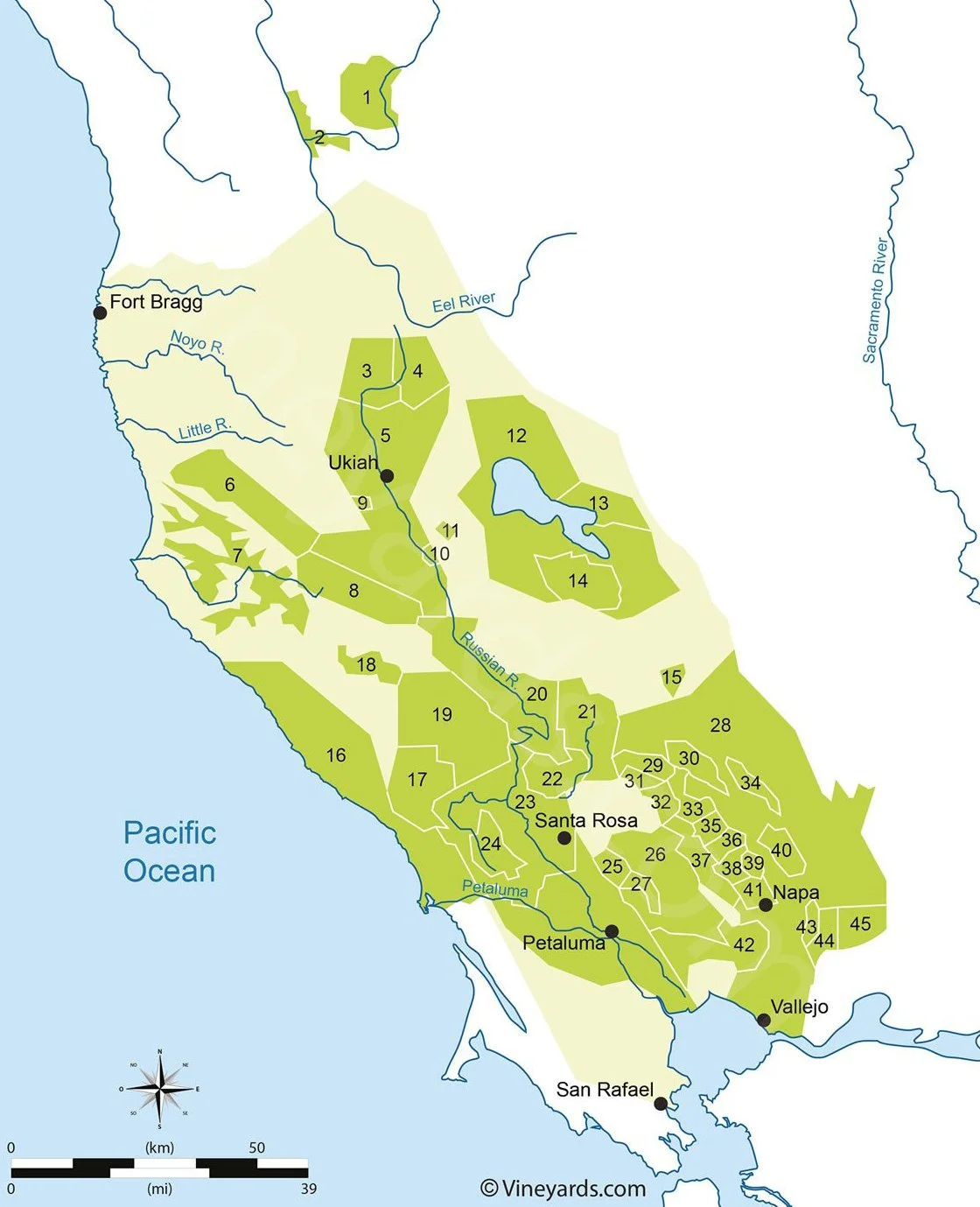
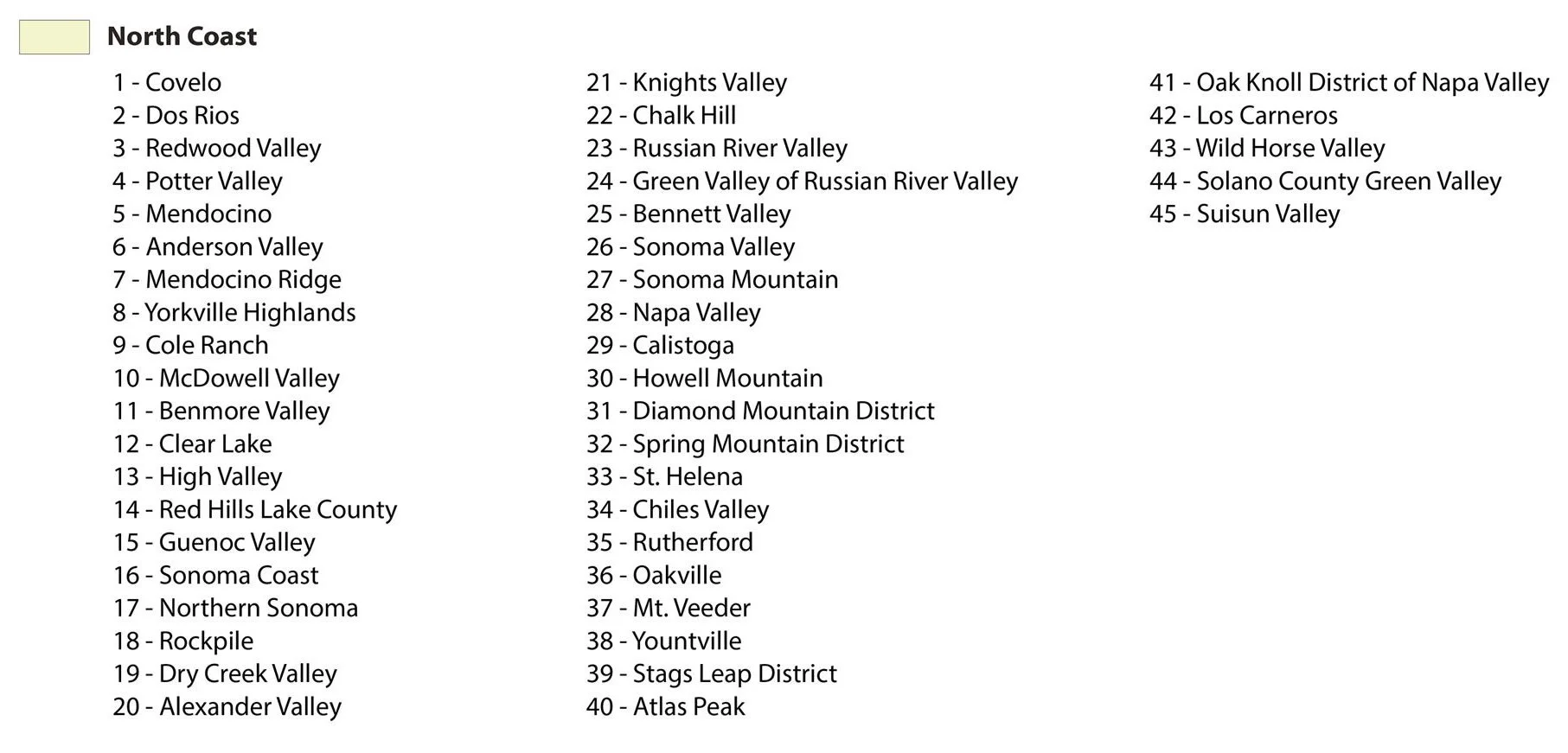
Napa is home to 16 sub-AVAs, each with distinct characteristics—from the volcanic soils of Howell Mountain to the foggy mornings of Carneros. While wine styles and philosophies vary, the region is defined by a high standard of winemaking, technological innovation, and a deep commitment to both sustainability and luxury positioning. Legendary names like Robert Mondavi, Opus One, Screaming Eagle, and Stag’s Leap Wine Cellars have helped elevate Napa to global prominence.
Valley Floor
The valley floor—including AVAs such as Rutherford, Oakville, Yountville, and parts of Stags Leap District—is where many of Napa’s most iconic vineyards are found. These areas benefit from fertile, well-drained alluvial soils, a warmer microclimate, and a relatively gentle terrain that allows for efficient vineyard management and consistent yields.
Wines from the valley floor tend to be rich, plush, and approachable, often showcasing ripe blackcurrant, cassis, mocha, and vanilla notes with polished tannins. The "Rutherford dust"—a term used to describe the distinctive earthy texture of Cabernet from that AVA—is emblematic of the valley floor style. These wines are often considered archetypal Napa Cabs, offering generosity, immediate appeal, and high aging potential. Most of the large, high-profile wineries are based here due to accessibility and visibility.
Mountain Vineyards
In contrast, Napa’s mountain AVAs—including Howell Mountain, Mount Veeder, Diamond Mountain, Spring Mountain, and Atlas Peak—sit at elevations between 400 and over 2,000 feet. These sites have poorer, rockier soils, cooler temperatures, and greater diurnal shifts. The vines here struggle more, leading to lower yields but more intense fruit.
Mountain-grown wines are typically more structured, tannic, and age-worthy, with firmer acid and more pronounced minerality. Flavors often lean toward dark berries, graphite, herbs, and crushed rock, with a noticeable density and vertical power. These wines may require more time in bottle to soften but often reward patience with greater complexity and nuance.