Mosel
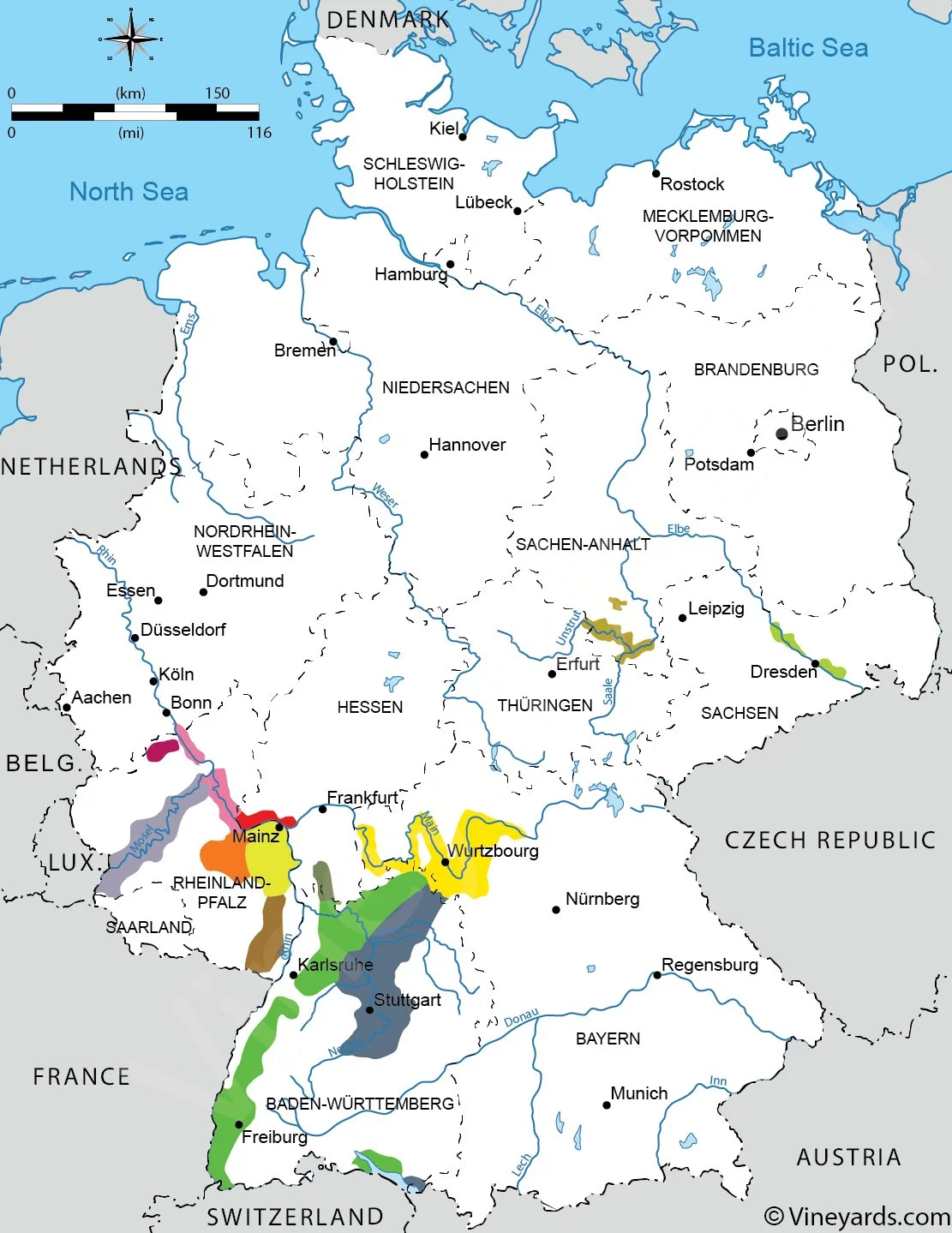
The Mosel is one of Germany’s—and the world’s—most iconic wine regions, renowned for producing some of the most delicate, aromatic, and age-worthy Riesling wines in existence. Located in western Germany along the winding Mosel River and its tributaries (the Saar and Ruwer), the region is famous for its precipitously steep vineyards, slate-rich soils, and a marginal continental climate that makes viticulture both risky and rewarding. The Mosel was officially known as Mosel-Saar-Ruwer until 2007, a name still used informally to reflect its three distinct winegrowing valleys.
Riesling is the undisputed star of the Mosel, prized for its ability to express site, minerality, and vintage variation with unmatched precision. The wines range from bone-dry (Trocken) to lusciously sweet (Trockenbeerenauslese, Eiswein), all unified by high acidity, low alcohol, and a remarkable sense of transparency. While the region has embraced a growing trend toward dry styles, especially under the VDP Grosses Gewächs system, many producers still excel at producing the off-dry and sweet styles that made the Mosel famous.
The Middle Mosel is the heartland of the region, stretching from Bernkastel-Kues to Traben-Trarbach. It contains many of the most celebrated and historically important vineyards and villages, including Wehlen, Graach, Ürzig, and Piesport. The vineyards here are carved into the slate-covered slopes along the river’s serpentine path, some reaching gradients over 60 degrees, making them among the steepest in the world.
This area produces the most classical Mosel Rieslings—wines with feather-light bodies, crystalline acidity, and vibrant flavors of green apple, white peach, lime, and slate. The soils, mostly blue and gray slate, reflect sunlight and retain heat, helping grapes ripen despite the cool climate. Legendary producers such as Dr. Loosen, Joh. Jos. Prüm, Markus Molitor, and Fritz Haag are based here, crafting wines that combine finesse, longevity, and unmistakable terroir.
The Lower Mosel, sometimes called the Terrassenmosel, extends from Winningen near Koblenz downriver. This is the steepest and most rugged part of the region, with ancient terraced vineyards clinging to narrow slate cliffs.
The Upper Mosel lies closer to the border with Luxembourg and France and is geologically distinct from the rest of the region. Rather than slate, its soils are largely limestone and marl, making it more akin to Champagne or Chablis than to the rest of the Mosel. While Riesling is still grown, this area is better known for wines made from Elbling—an ancient white grape variety that yields light, crisp, and refreshing wines—and increasingly, Auxerrois and Pinot Blanc.