Bordeaux
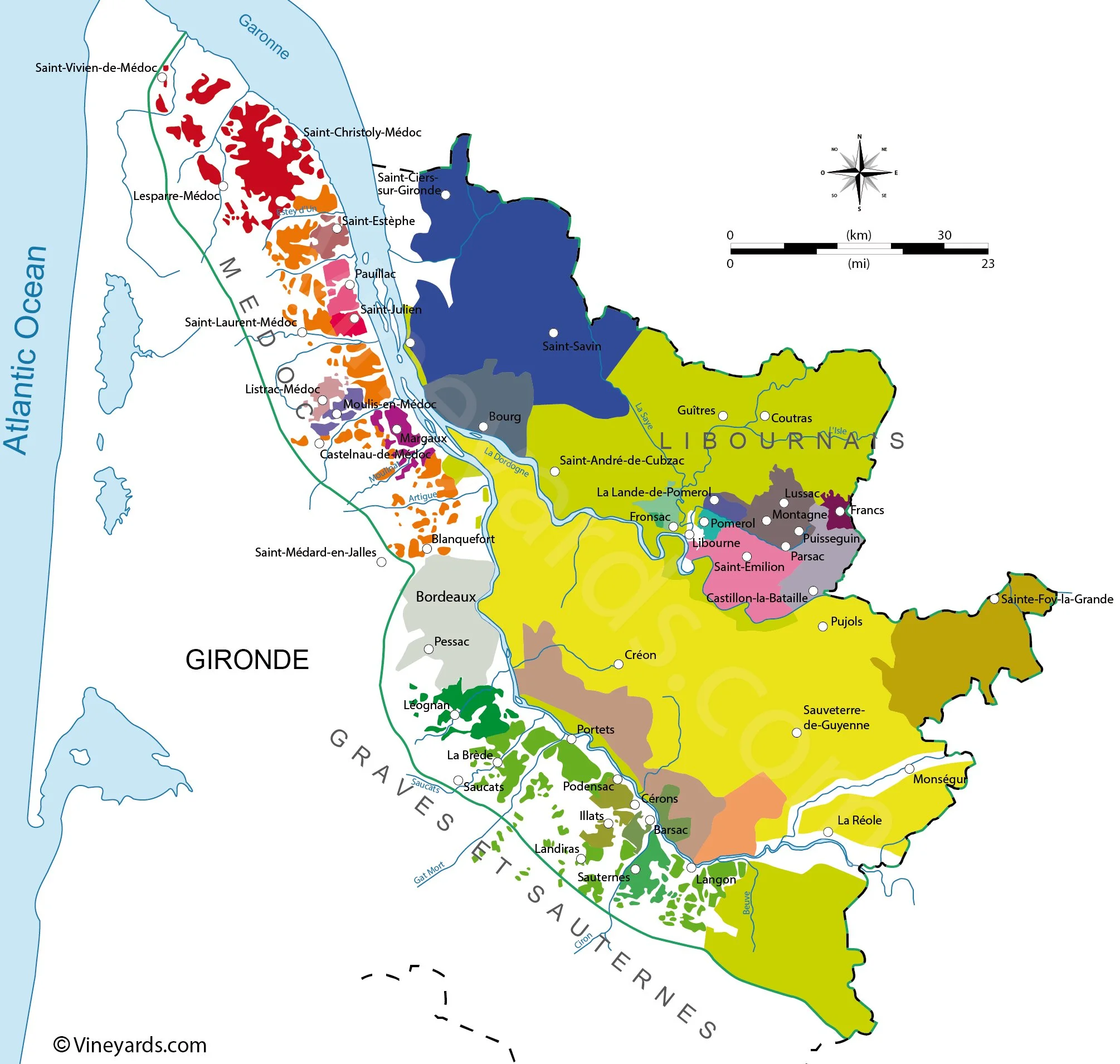
Bordeaux, located in southwestern France, is one of the world’s most prestigious and historic wine regions. With a winemaking heritage dating back to Roman times, Bordeaux is celebrated for its refined red blends, elegant whites, and lusciously sweet dessert wines. The region benefits from a temperate maritime climate, moderated by the nearby Atlantic Ocean and Gulf Stream, which provides ideal conditions for slow, balanced ripening of grapes.
The Bordeaux region is defined by the Gironde Estuary and its two tributary rivers—the Garonne and the Dordogne—which divide the region into distinct subzones and influence both microclimate and soil composition. The region is famous for its blended wines, particularly reds made primarily from Merlot, Cabernet Sauvignon, and Cabernet Franc, with supporting roles played by Petit Verdot, Malbec, and Carménère. White wines are typically based on Sauvignon Blanc, Sémillon, and Muscadelle.
Bordeaux is home to over 60 appellations, including legendary names like Margaux, Pauillac, Saint-Émilion, Pomerol, and Sauternes. It also boasts several classification systems, most famously the 1855 Classification of the Médoc and Sauternes, which ranks châteaux into growths (Crus Classés). Other systems include the Graves Classification, the Saint-Émilion Classification, and the Cru Bourgeois of the Médoc.
Left Bank
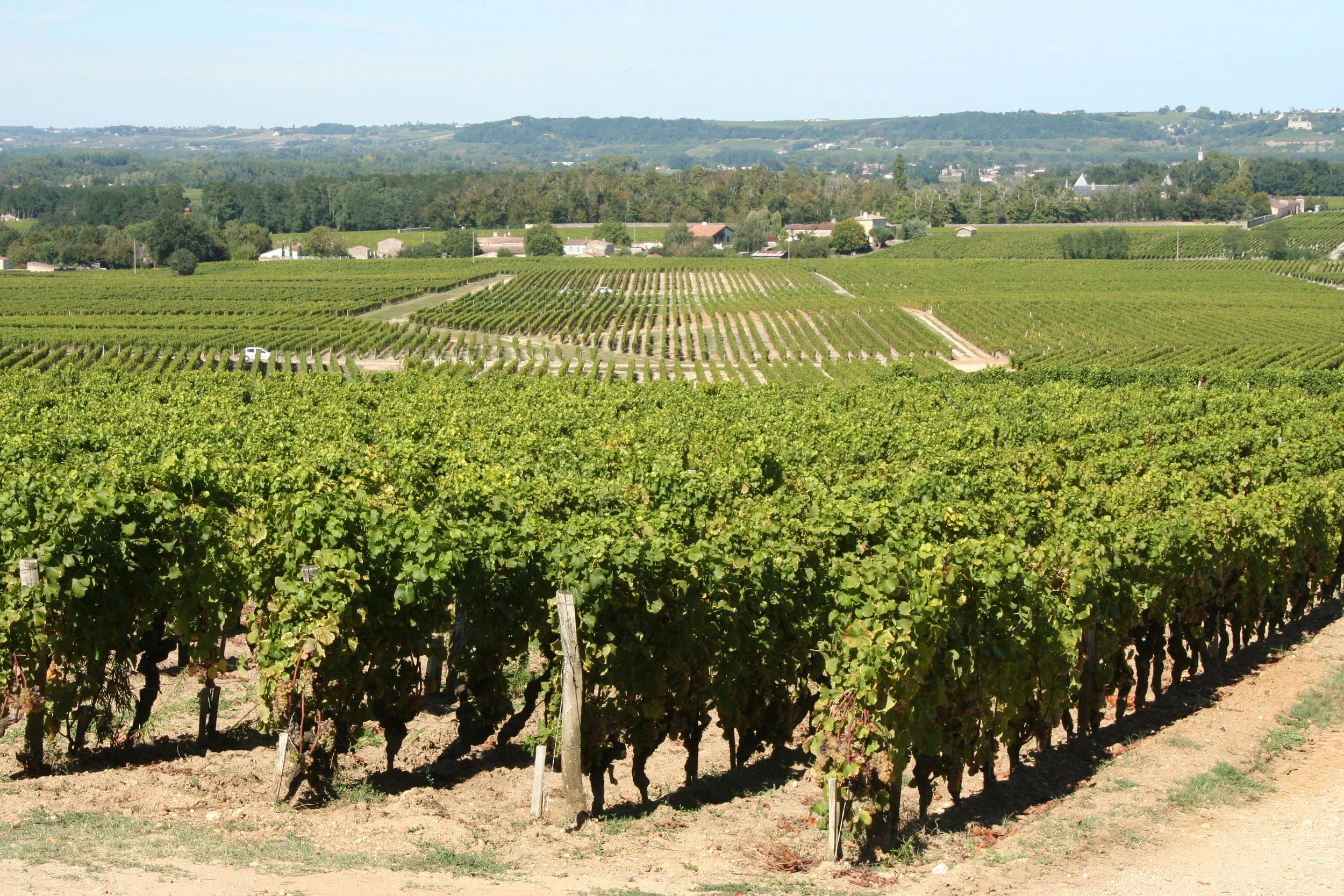
The Left Bank, which includes the Médoc, Haut-Médoc, Graves, and Pessac-Léognan, is known for its gravel-rich soils and its emphasis on Cabernet Sauvignon. These wines are typically structured, age-worthy, and powerful, with firm tannins and notes of blackcurrant, graphite, tobacco, and cedar. Iconic estates such as Château Lafite Rothschild, Château Margaux, Château Latour, and Château Haut-Brion are all based here, forming the backbone of the First Growths designated in 1855. The gravel soils provide excellent drainage, encouraging deep root systems and producing wines with intensity and longevity.
Right Bank
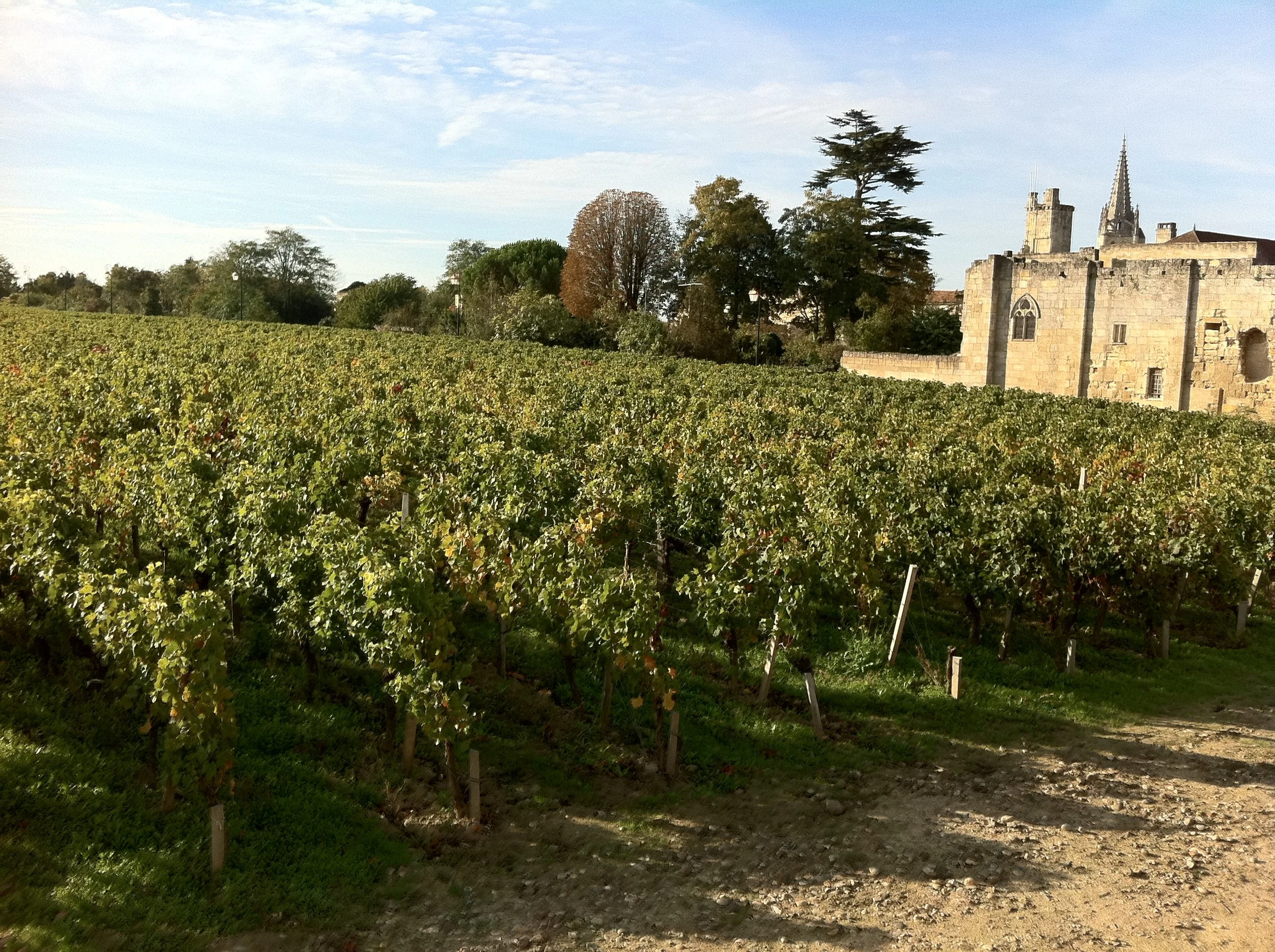
The Right Bank, centered around Saint-Émilion and Pomerol, is characterized by clay and limestone soils and a stronger focus on Merlot. These wines tend to be softer, rounder, and more approachable in youth, with plush textures and notes of plum, cherry, spice, and earth. While the Right Bank lacks a formal classification as detailed as the Left Bank, it is home to some of Bordeaux’s most celebrated and expensive wines, including Château Pétrus, Château Le Pin, and Château Cheval Blanc. Cabernet Franc plays a prominent supporting role here, contributing aromatic lift and finesse.
In addition to its reds, Bordeaux produces notable dry whites (especially from Pessac-Léognan and Entre-Deux-Mers) and some of the world’s greatest sweet wines from Sauternes and Barsac, led by the legendary Château d’Yquem. These wines are typically made from botrytized (noble rot) grapes, offering rich, honeyed complexity with vibrant acidity.